Project Overview
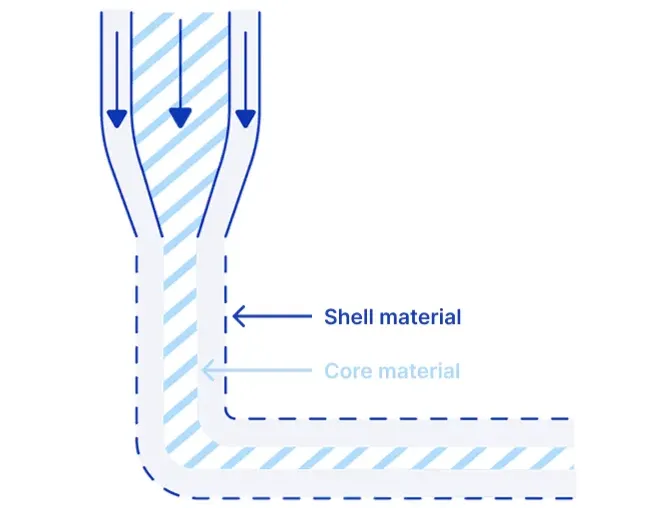
The goal of the project was to design a nozzle to allow for coaxial extrusion of multi-materials (an inner ‘core’ material and an outer ‘shell’ material).
The project was part of my work in the Architected Materials and Additive Manufacturing Lab with the purpose of understanding and taking advantage of the unique mechanics of these materials, enabled through this additive manufacturing process.
Objective
The objective of this project was to develop a coaxial nozzle capable of extruding multiple materials simultaneously for additive manufacturing. At the time, coaxial nozzles were being used in medical and biology based research but few nozzle designs were compatible for use in cementitious paste based additive manufacturing.
This nozzle would allow for the creation of composite structures with an inner ‘core’ material surrounded by an outer ‘shell’ material. After initial brainstorming, the requirements of the nozzle design were defined as below:
- Easily configurable depending on material
- Easily printable on traditional FDM 3D printers
- Easily cleanable
- Easily integrated with off-the-shelf components
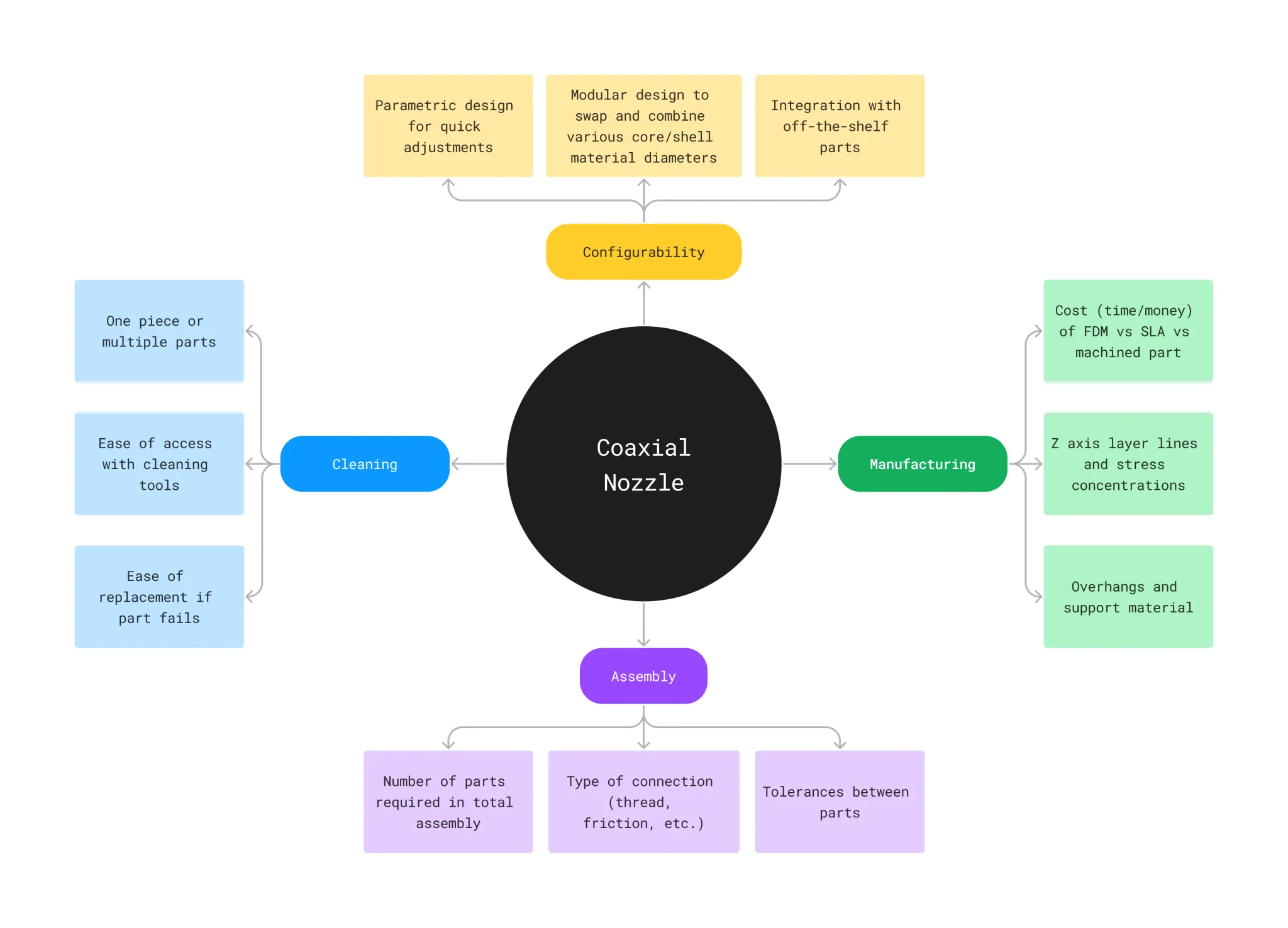
By achieving these objectives, the project aimed to advance the capabilities of multi-material 3D printing and open up new possibilities for research.
Design Process
Concept Sketches
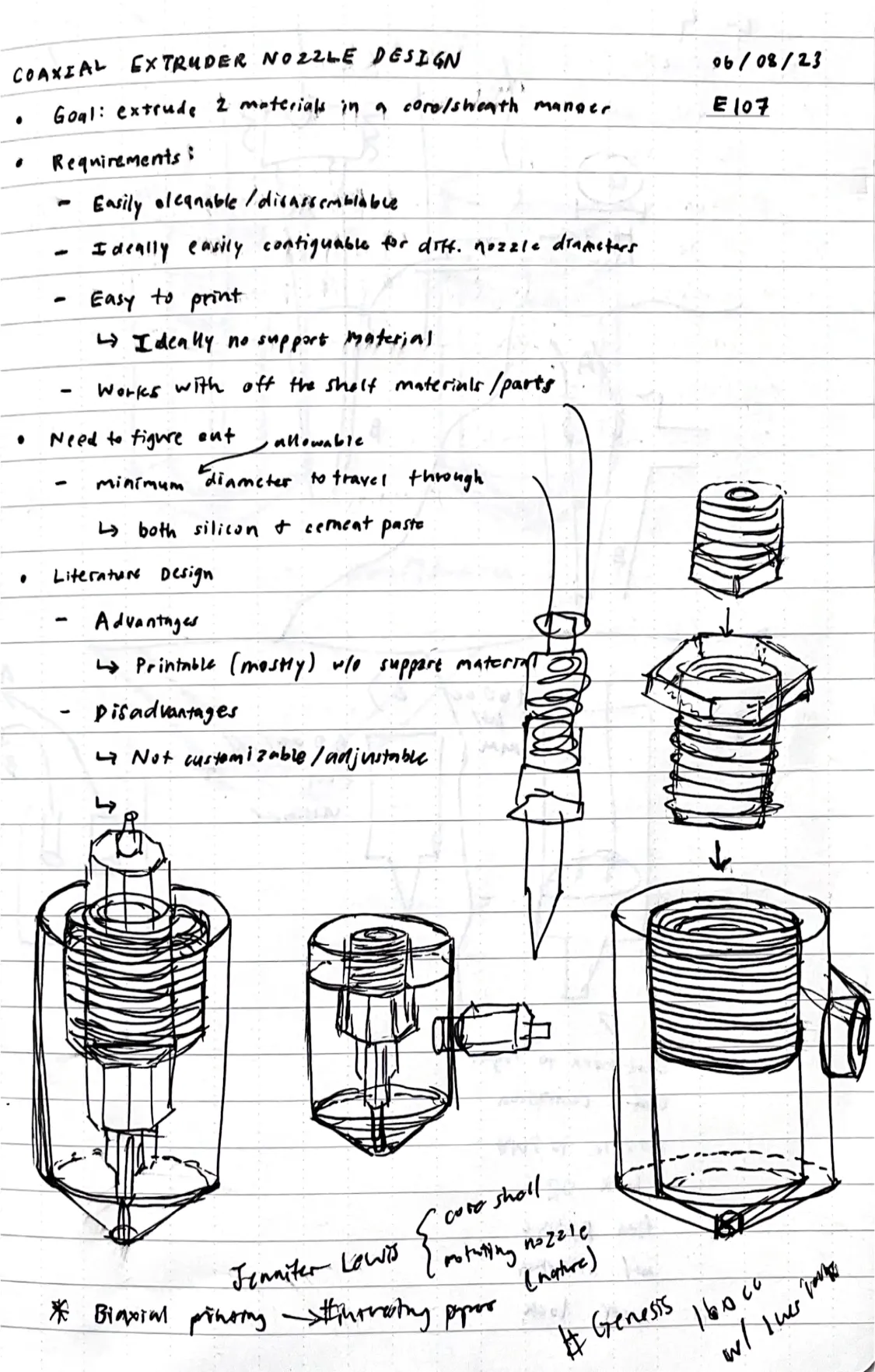
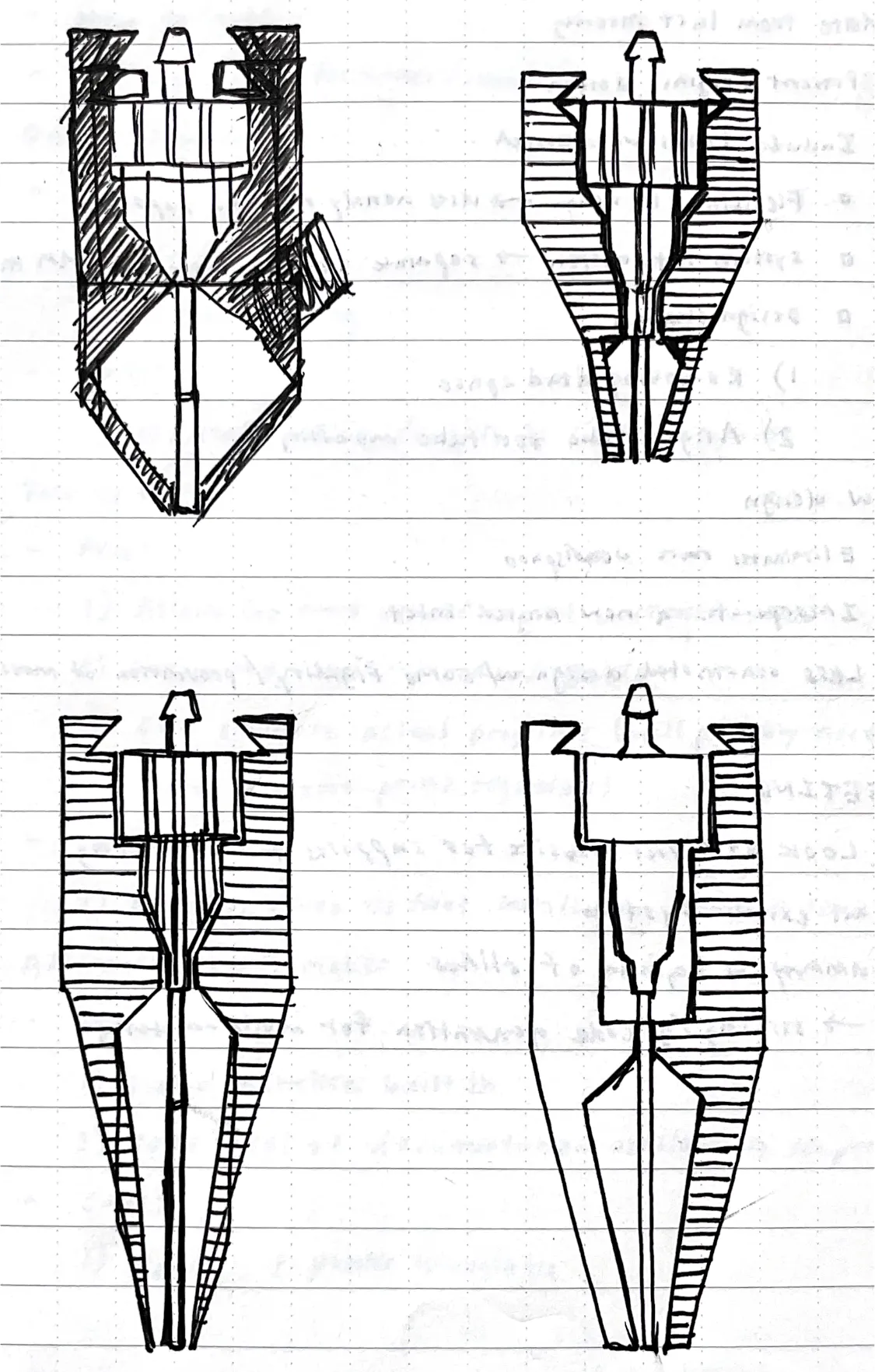
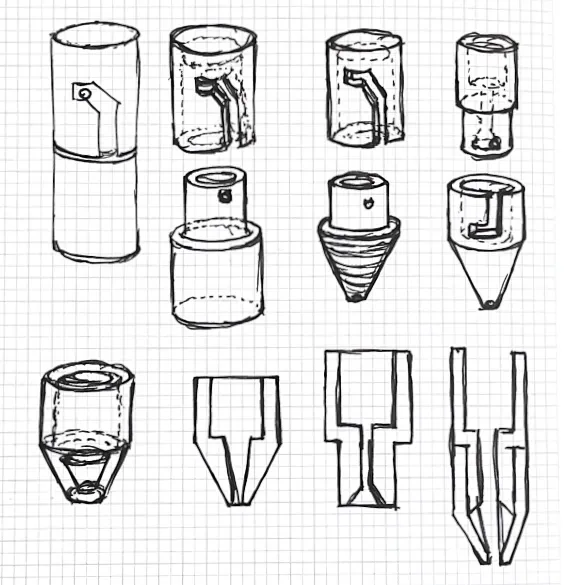
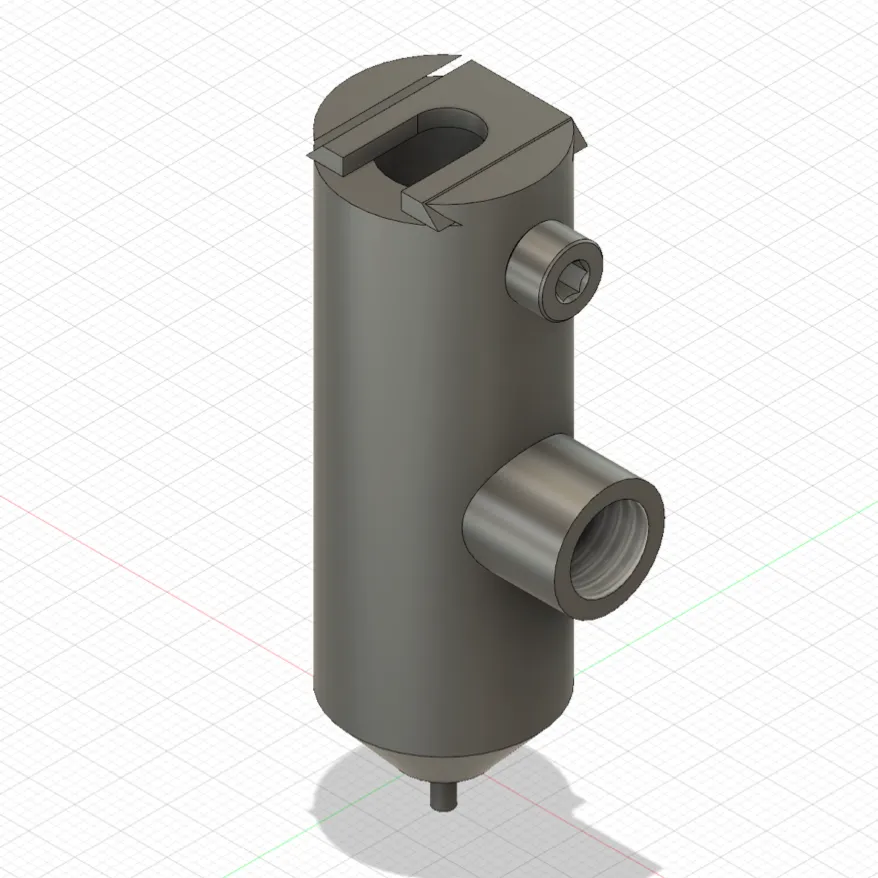
Above are initial sketches and CAD models of the early design stages. As mentioned above, one of the core considerations that drove design intent was the nozzle’s configurability with existing, off-the-shelf components. Additionally, part of the DFM considerations were specific to FDM printers, given their easy accessibility in research labs and low cost barrier to entry of use.
Some of these DFM considerations are evident in the shape of the nozzle, such as:
- 45 degree nozzle taper to reduce support material
- Geometry to reduce overhangs
Testing
Testing Rig
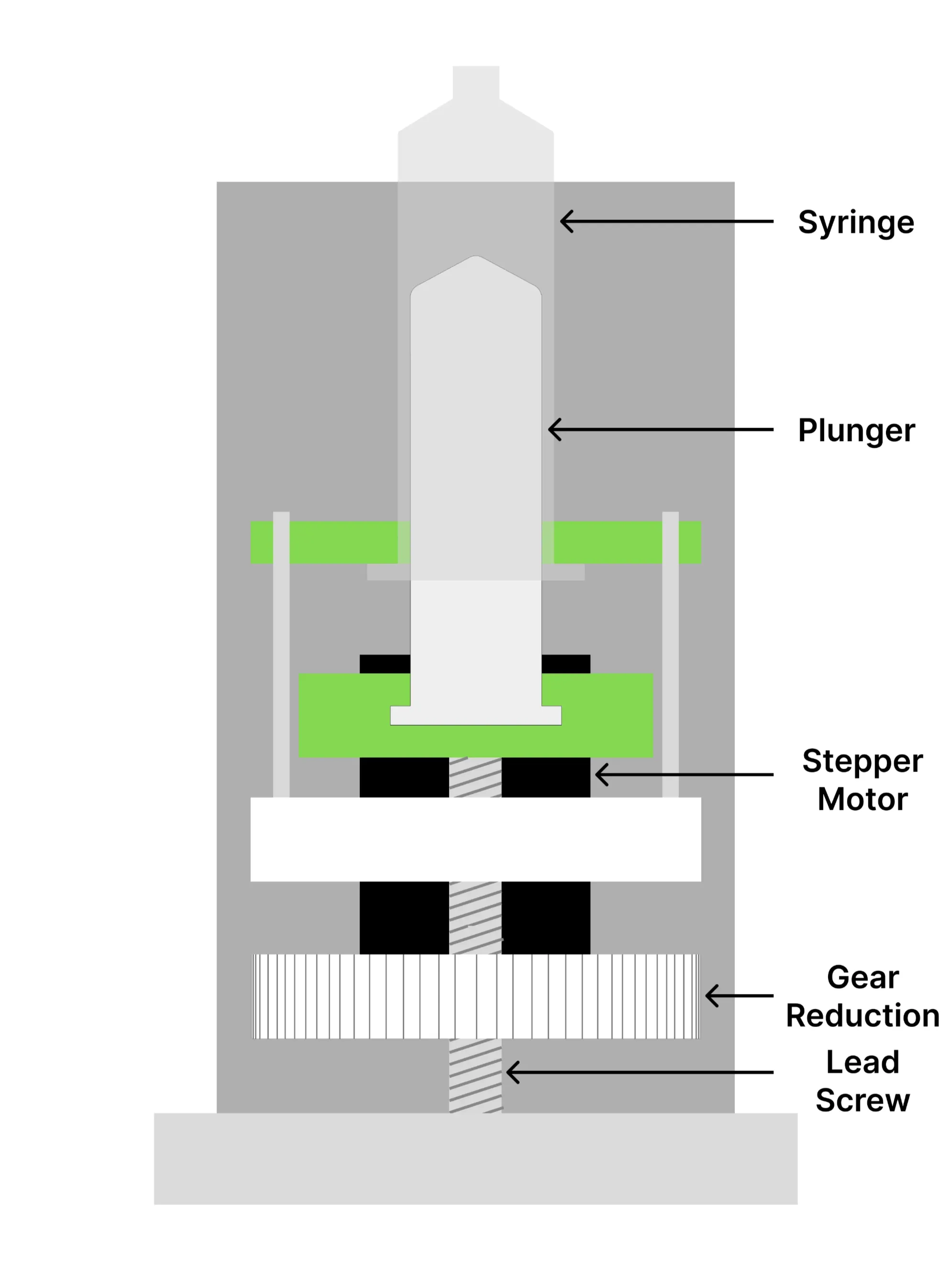
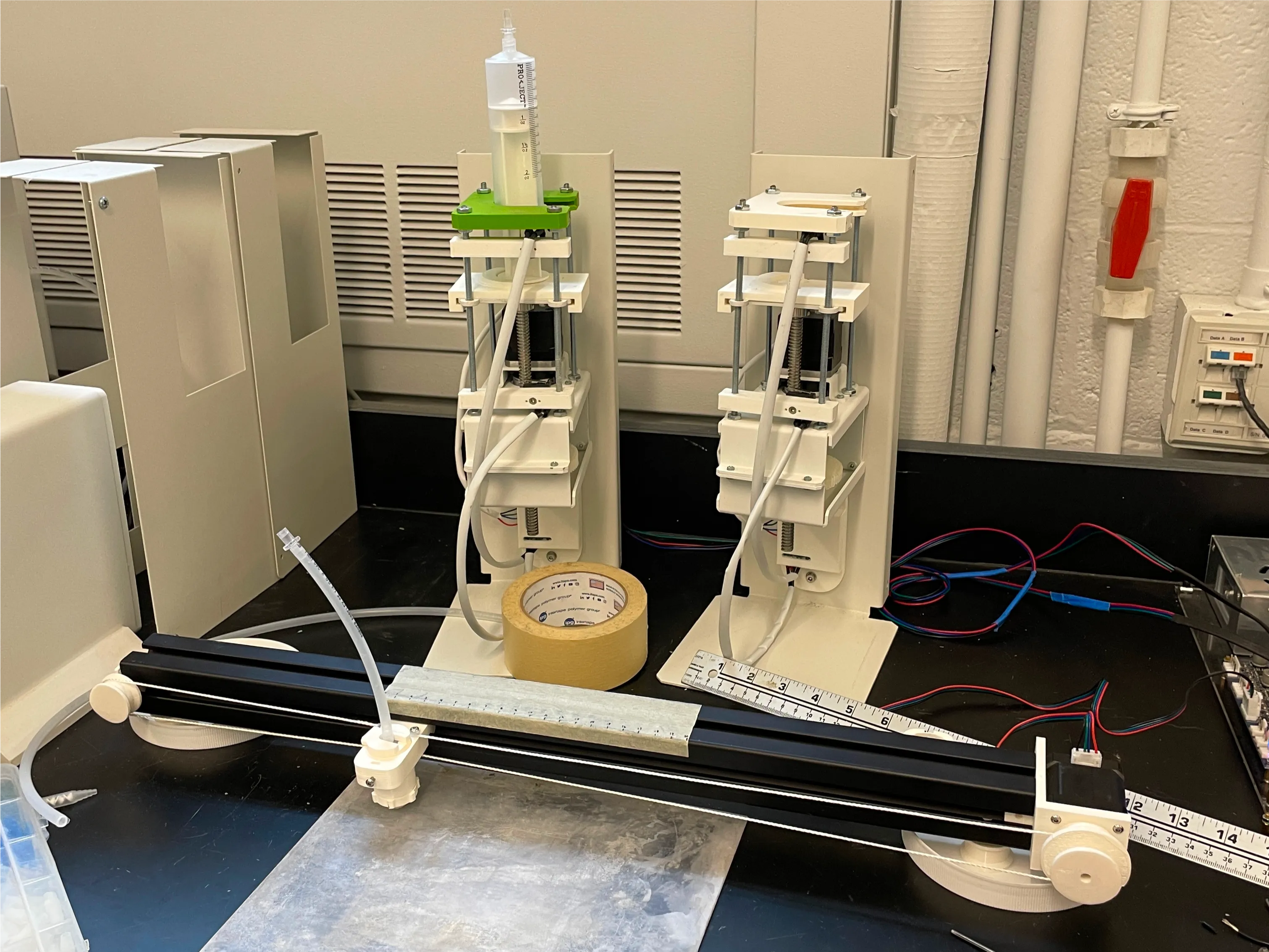
In order to test the system, two extruders were required to connect to the core inlet and shell inlet. Using a (now discontinued) dual syringe extruder system, I was able to rewire the stepper motor connections to interface with a Raspberry Pi 4. Below is a diagram of the system:
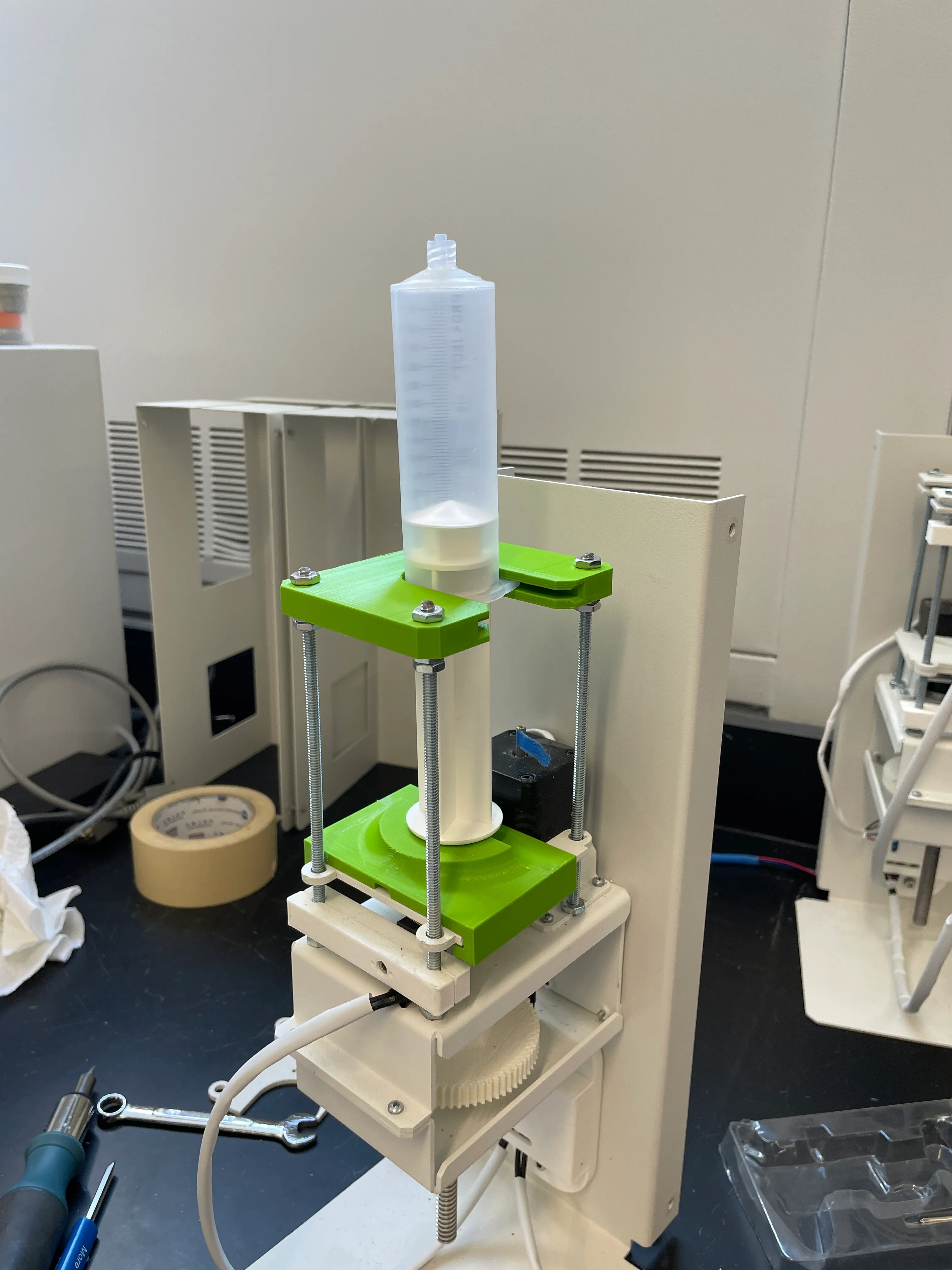
Additionally, I put together a simple test rig using existing parts around the lab to hold the nozzle in place and move it in 1-dimension. Rather than moving the nozzle by hand, this test rig allowed me to test the nozzle in a more repeatable manner.
Calibration Calculations
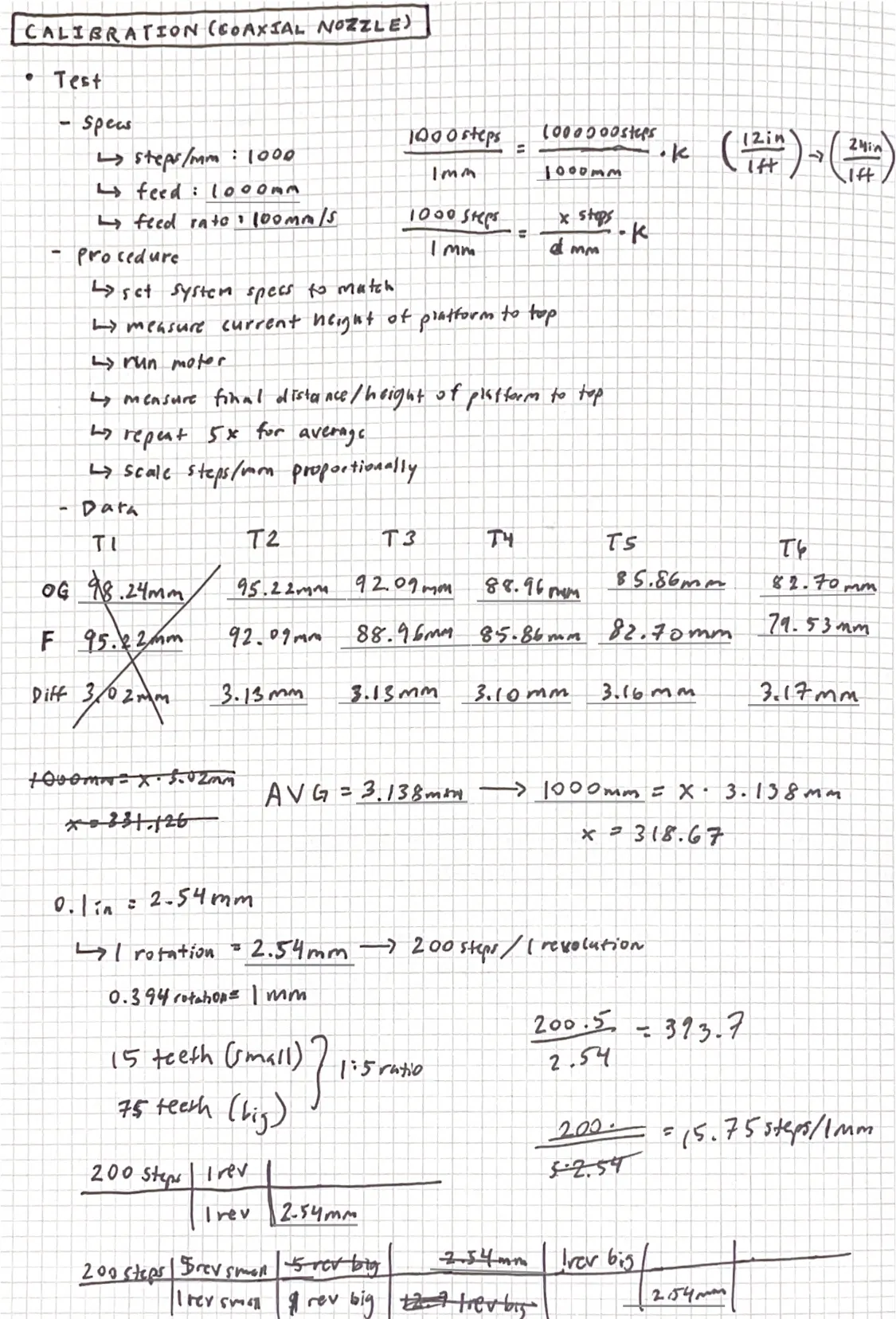
In order to integrate the dual extruder setup, the stepper motors had to be connected to the Raspberry Pi 4 and calibrated with the correct extrusion factor. As seen below, the feed rate of the extruder uses units of millimeters/second. Although the theoretical extrusion factor could be calculated, for the sake of a sanity check, I also calculated an experimental factor.
Challenges and Solutions
FDM Printing Adhesion Issues
Challenge
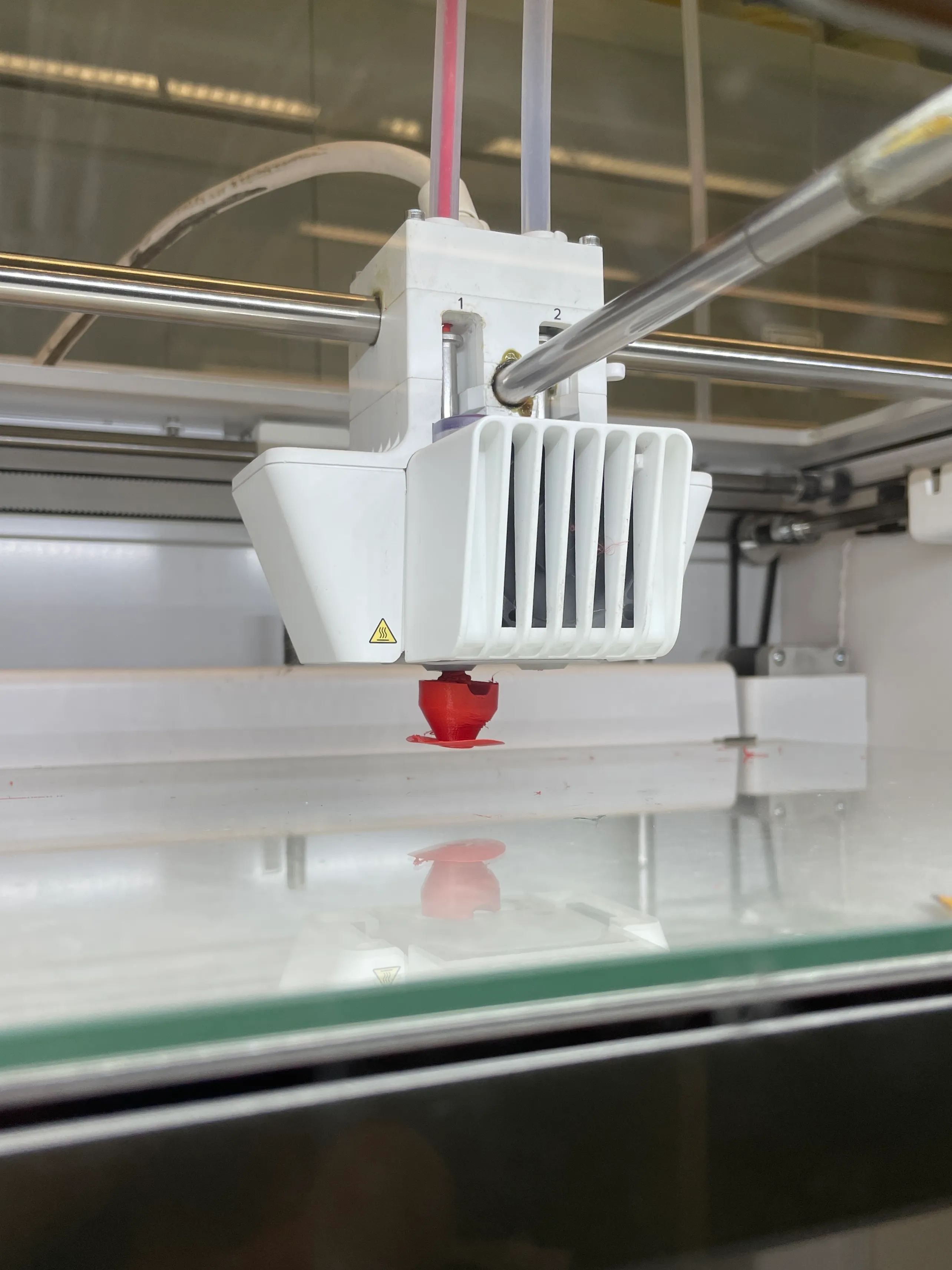
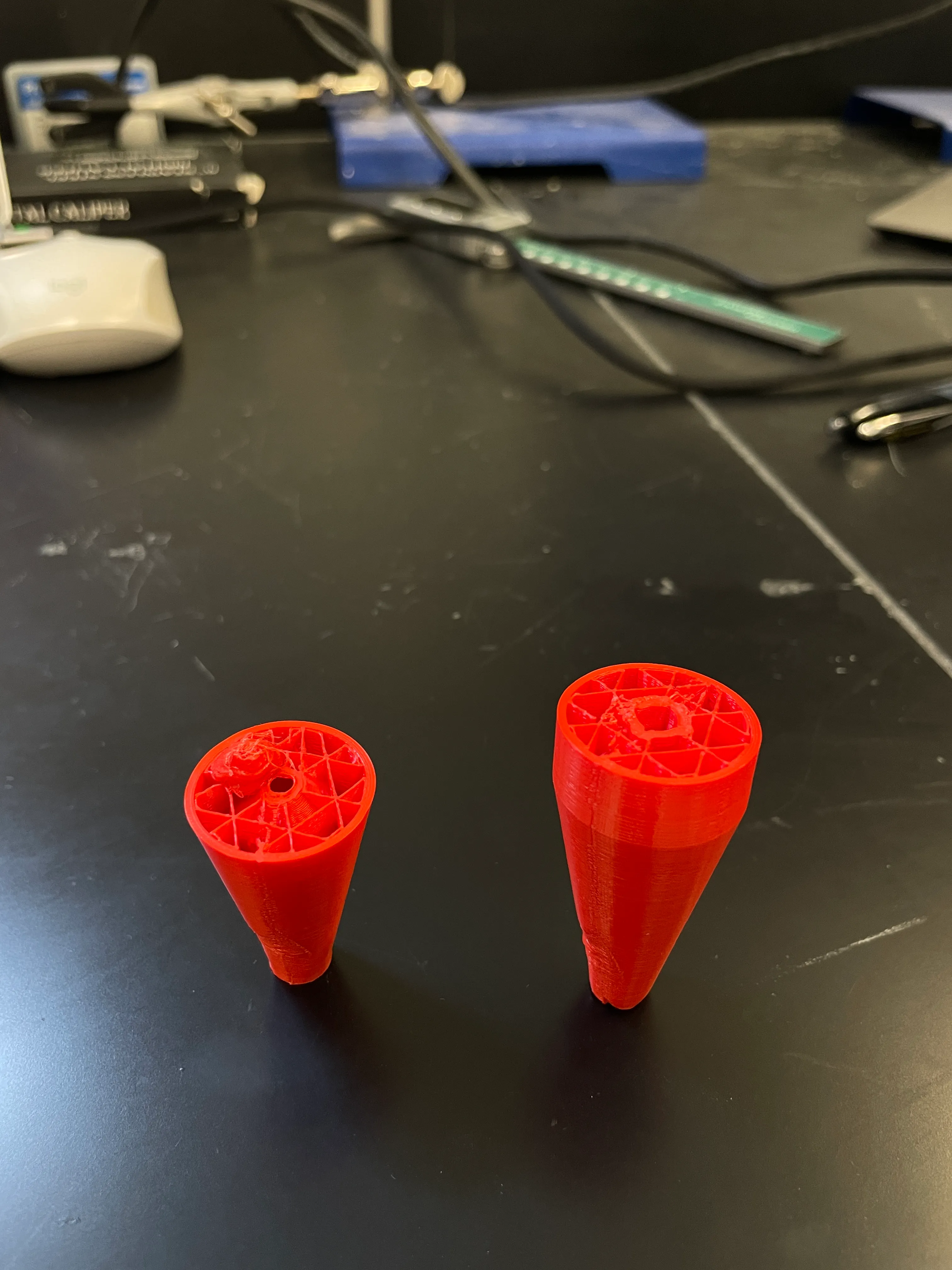
- The initial designs were printed in one part with the nozzle tip as the base
- Due to the limited contact surface area with the print bed, the prints would separate from the bed mid-print causing print failure
Solution
- Separate the nozzle into two parts to allow the tip to be printed upside down and the upper body to be printed with a larger contact surface area
- Although this solution would increase the total part count, it actually allowed for the nozzle chamber to be more easily cleaned, thus addressing the cleanability requirement
Cracking At Locking Mechanism
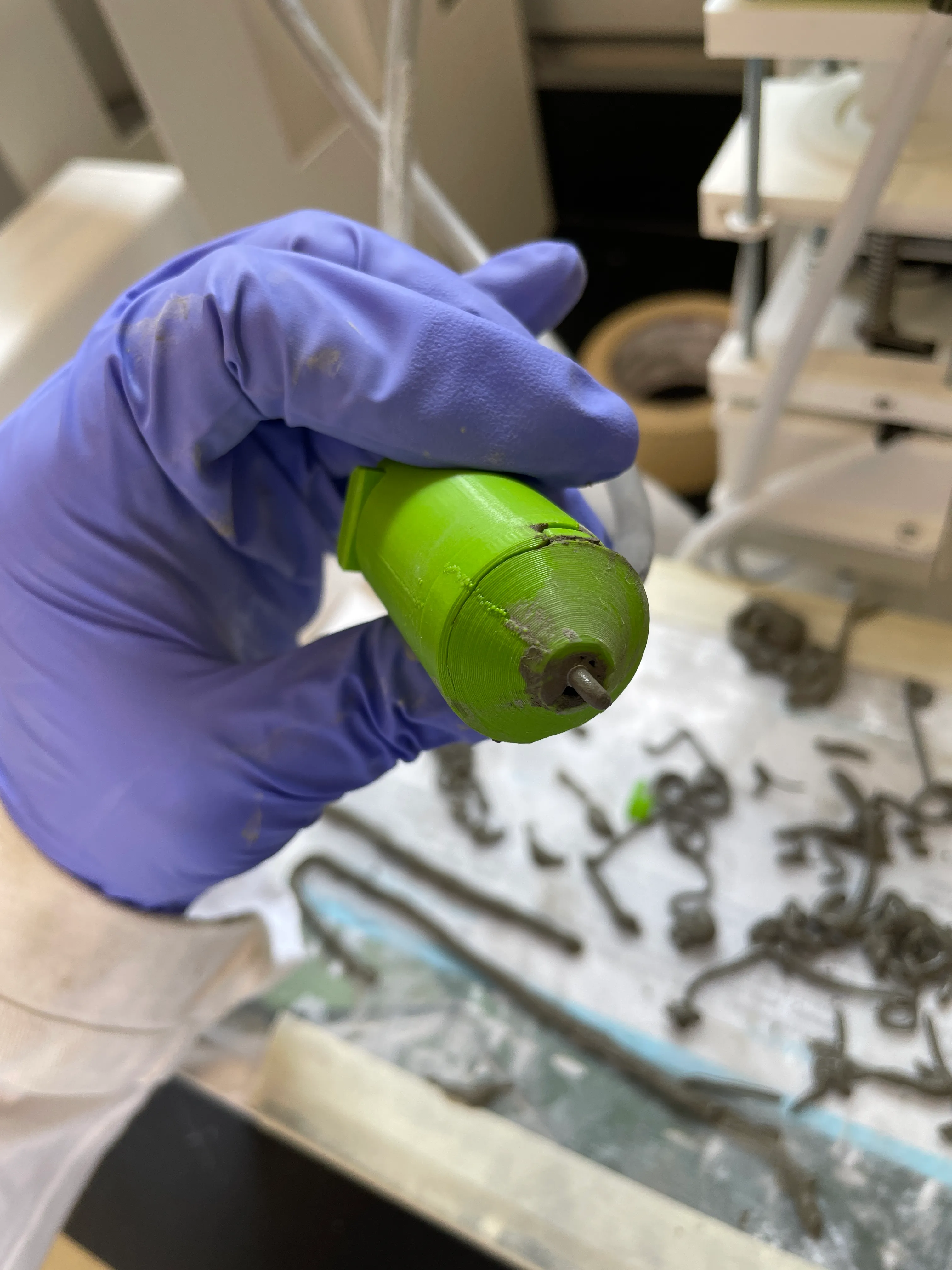
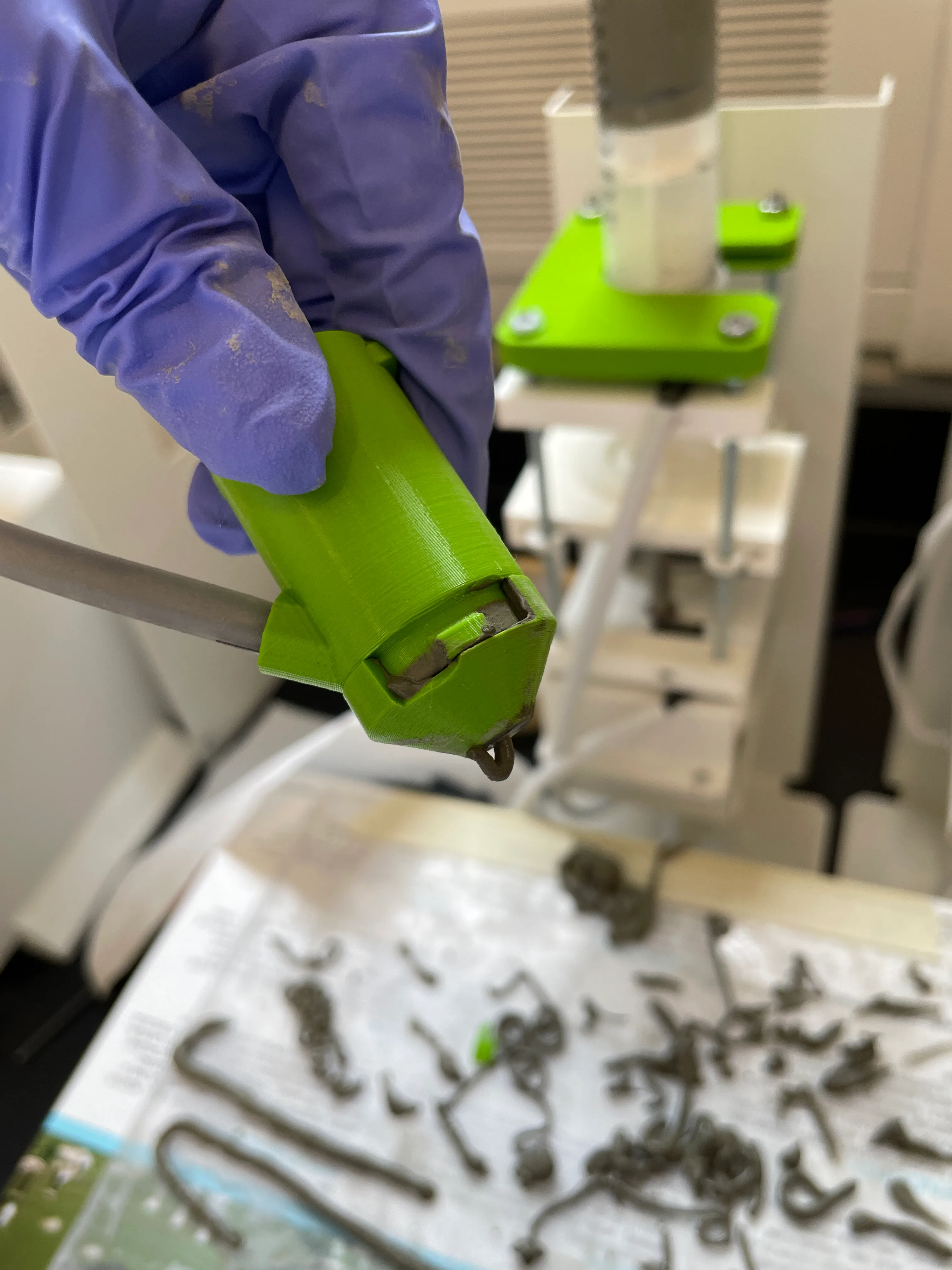
Challenge
- Due to the pressure buildup inside the nozzle cavity, the stresses along the layer lines were causing the weakest parts of the part to crack
- This design used a “twist-and-lock” mechanism which required thin walls at the interface between the lower nozzle and upper body
Solution
- Change the two part design to use a thread
- Although I initially had doubts about using threads due to imprecise FDM tolerances, after making a prototype using them, I found them to be more resistant to leakage and structurally stronger than the previous version
- The threads were designed with a coarse thread pitch to be more forgiving of FDM tolerances